Deep Hubris
What the Titan tragedy reveals about organizational failure.

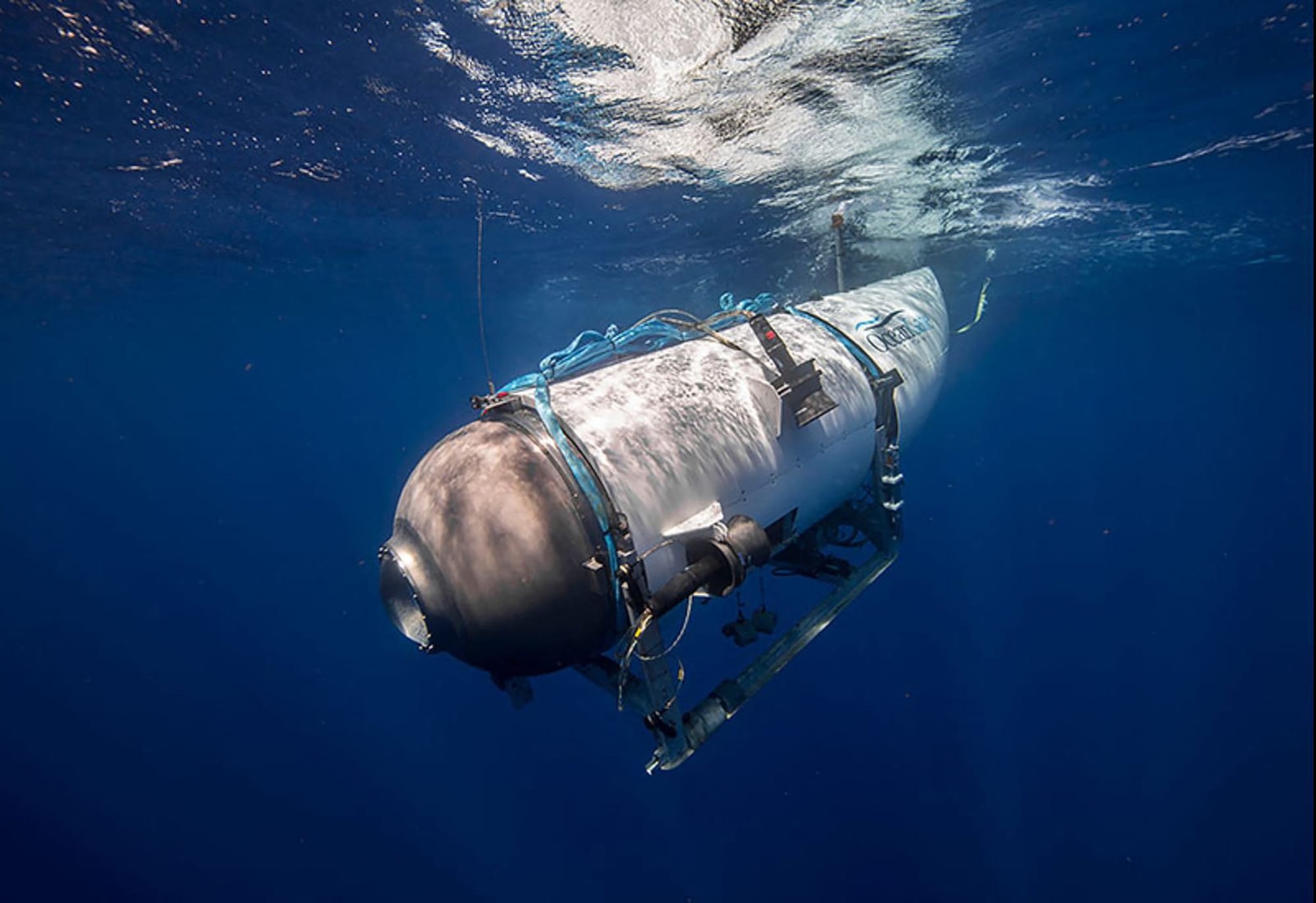
As of this writing, it's over two years after debris from the OceanGate Titan submersible was found on the seafloor near the Titanic wreck. I wrote most of this post in June 2023, but held off from publishing it until I learned more about OceanGate's operations.
The US Coast Guard's Marine Board of Investigation has released their report on what went down in June 2023. I have read it and found it even more damning than the initial media coverage of the tragedy. The report comprehensively shows that OceanGate was actually the exception in a relatively conservative and safe industry.
Many people think deep-sea diving is dangerous and the Titan tragedy sure didn't help. But the data says otherwise. Riding a deep-dive submersible (as opposed to scuba-diving) is about the safest thrill you can do. Manned underwater vehicles (MUVs) have a perfect safety record of... zero deaths across 40 years, as of 2013. The world-famous submersible Alvin has achieved more than 6,500 dives transporting more than 3,000 people to the ocean floor.

The personal submersible market is pretty small. There are at least three companies that make deep-dive submersibles for civilian use. The youngest has been around since 2008. At the price tags of the vehicles they offer, there must be very few of them in service.
| Company | Founding Date | Deepest Product | Max Depth (msw) | No. of Occupants |
|---|---|---|---|---|
| Triton Submarines | 2008 | Limiting Factor* | 11,000** | 2 |
| U-Boat Worx | 2005 | C-Researcher 3000 | 3,000 | 2 |
| SEAmagine | 1995 | Aurora-100 | 2,300 | 3 |
*Renamed Bakunawa after its sale to Inkfish.
**Maximum dive depth. Test depth is actually 14,000 meters of sea water (msw)
These companies cater to yacht owners, cruise lines, scientific research organizations, or filmmakers. The deepest vehicles they offer all have spherical pressure hulls because a sphere distributes pressure most efficiently for the least volume and surface area (meaning less material). This choice restricts the number of occupants the submersible can have, because a larger sphere would be heavier and harder to haul in and out of the water with the support vessel's crane. This restricts the market, but it's an unavoidable limitation. All these vehicles have successfully operated many times at various extreme depths.
That's why the Titan tragedy was so shocking.
I won't go too deep into the details - it's all in the report. As I read it, my mind kept going back to other "startups" promising revolutionary products that failed to deliver. The parallel is uncanny. A decade ago, Theranos claimed that it had devised blood tests requiring only a single prick. Like Titan's carbon fiber hull, the blood test device never actually passed rigorous tests. Theranos engaged in stonewalling and legal action when journalists began to question its claims, like OceanGate did with its employees and contractors a decade later. Unfortunately for OceanGate, the deep ocean is much more unforgiving than the inside of a clinic.
I can see the reasoning behind OceanGate's choice to go with a cylindrical hull. Their goal was to increase the number of occupants, and thus expand the market for deep-sea diving. A cylindrical hull is less efficient at resisting pressure than a spherical hull, so the price would be to make the hull thicker and thus heavier. OceanGate's other choice of carbon fiber for the pressure hull was meant to slash the submersible's overall weight. That decision, along with several other decisions downstream of that, sealed the fate of the submersible, the passengers, and the company.
When pressed to do testing on the carbon fiber hull to ensure it could withstand pressure at the depth of the Titanic wreck, Stockton Rush refused. Carbon fiber has been proven to be excellent at many things, but a competent engineer would not use a material that is not rated for the expected conditions. There was no data on CF's performance in high-pressure seawater. Had Rush agreed to testing, they might have found that carbon fiber has a tendency to delaminate under repeated compression/decompression cycling, which it was never meant for.
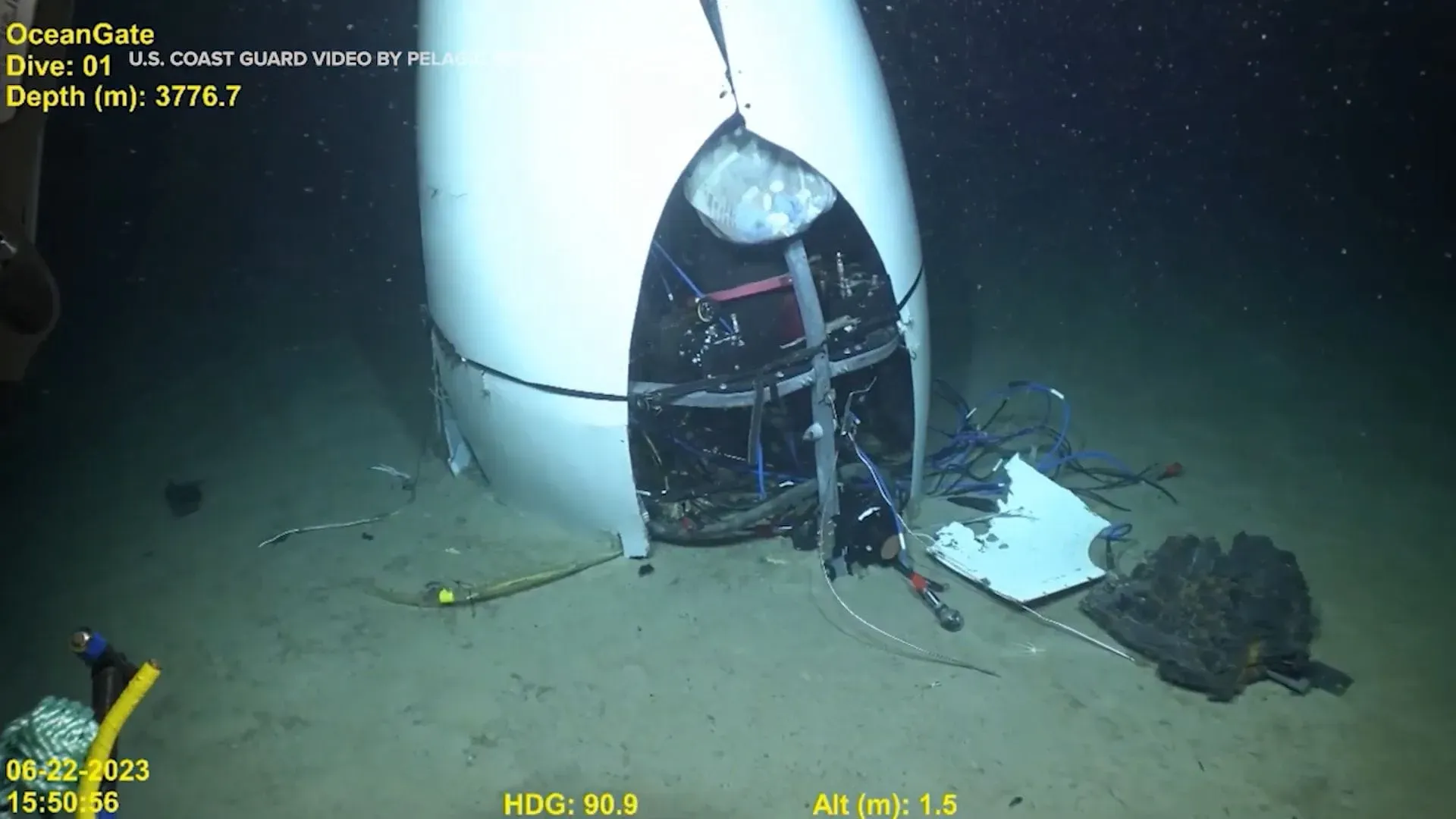
At extreme pressure, water acts like many little knife-points pressing against the fibers and through the resin, gradually breaking the fibers and forcing them apart. The breaks in the fibers were acoustically detected on several dives prior to the fatal dive, but OceanGate did not investigate these events.
The report also identified a number of other issues in the Titan's design and construction that could have killed a crew on another dive, if the carbon fiber hull hadn't failed first. One particular snippet is funny in a horrifying way because it shows something about Stockton Rush's mindset:
“The scrubber was a homemade Stockton thing. I tried to get rid of it multiple times. Always was told no. It was literally made from a Tupperware container that came from Walmart or Amazon or somebody like that. It had like a screen in the bottom with an air space underneath. You would pour the scrubber into this thing which was a granular chemical material, soap and lime is what it is, right. You'd pour that in there, and then there was a lid, a Tupperware lid that went on and in that Tupperware lid there was a computer fan. You'd attach the computer fan to a battery. That would pull air out of the environment, push it into the scrubber material and then, you know, through the grid at the bottom and out some vent somewhere. So, this thing never really kept up. If you put four people in the sub, it really couldn't keep up with the occupants' breathing rate. So – and it looked like it was a total piece of junk. I mean it looked like a Tupperware container from Walmart with computer fan on the top.”
-Unnamed Director of Engineering, OceanGate
If you like your comedy extra-black, here's the accompanying photo:
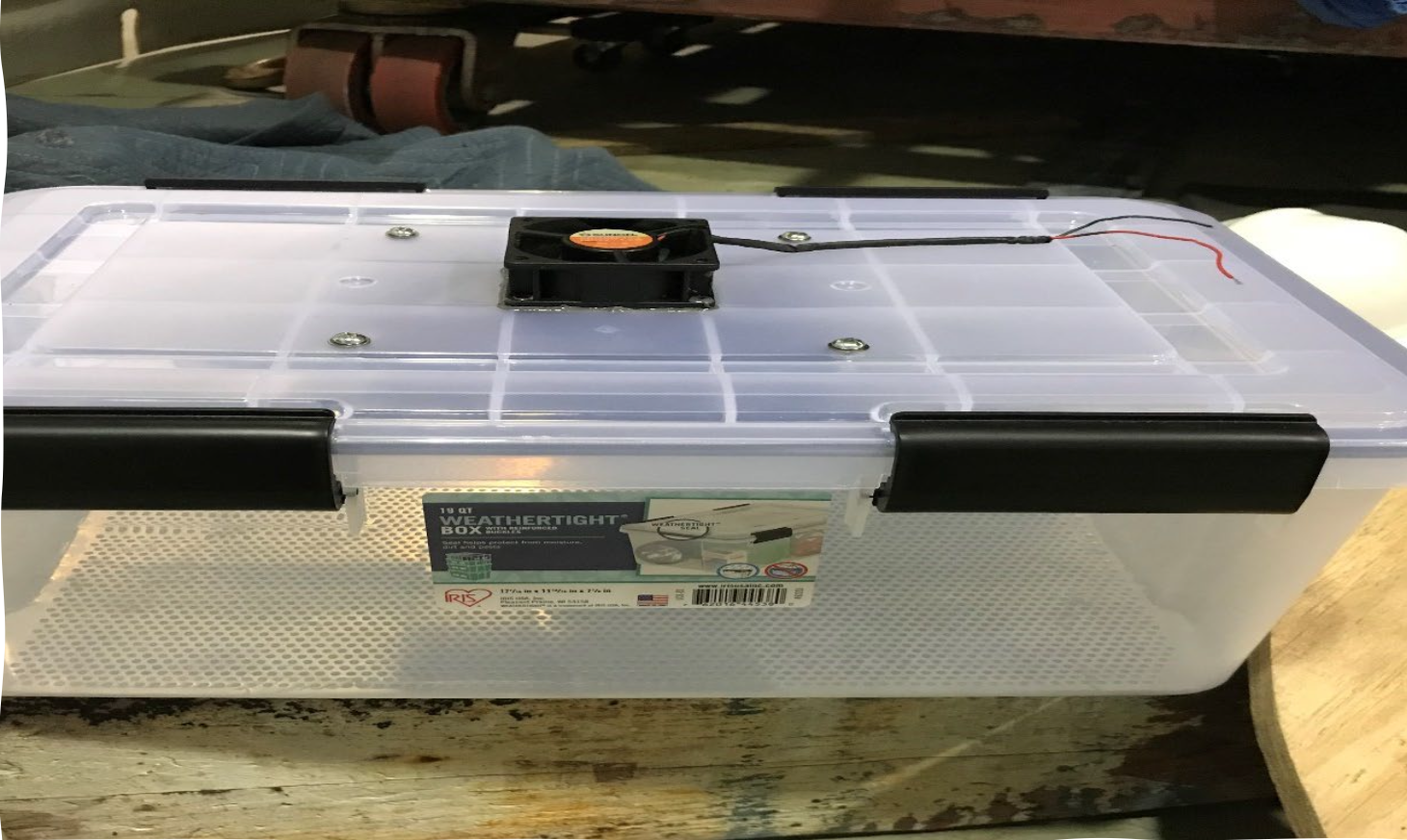
It's one thing to build something crude and ineffective. It's quite another to have it in service on a vessel that's supposed to keep its crew alive. The "Always was told no" line makes this even worse.
We have a broad picture of how OceanGate got to this point. Bad design. No testing. Nonexistent safety culture. But I'm most interested in how this operation even got funded, and why nobody stopped it in time.
In 2020, GeekWire reported that OceanGate had obtained $18 million of funding from unnamed investors to build 4 or 5 new submersibles to tour the Titanic wreck. Private companies in the US don't need to disclose their investors, but a line in the article is pretty telling:
He declined to identify the investors, other than to say that “it was 100% insiders.”
Reading between the lines, it seems like the investors are none other than Rush, his wife, and some of his friends and associates. If so, this would explain OceanGate's choices as a result of conflicts of interest. If Rush was the primary investor, this put pressure on him to make the venture succeed at all costs. Also, $18 million for 5 submersibles seems too cheap to make a safe vehicle. Triton Submarines charges between $2.5 and $40 million for each of their offerings, depending on their size and rated depth.
Both OceanGate and Theranos are valuable case studies in that their founders equated recklessness (or just plain uselessness) with innovation. Entrepreneurship is a way to deliver real solutions, but for some founders, it has become an ego-driven lifestyle. Only the most brazen, such as Elizabeth Holmes, are brought to justice. Or, like Stockton Rush, they are killed by physics. The most alarming thing about OceanGate is that this kind of behavior has seeped its way into extreme-environment tourism, where safety of passengers is paramount. How long before it hits a space company?