The ISRU Tradeoff
When is ISRU worth it?

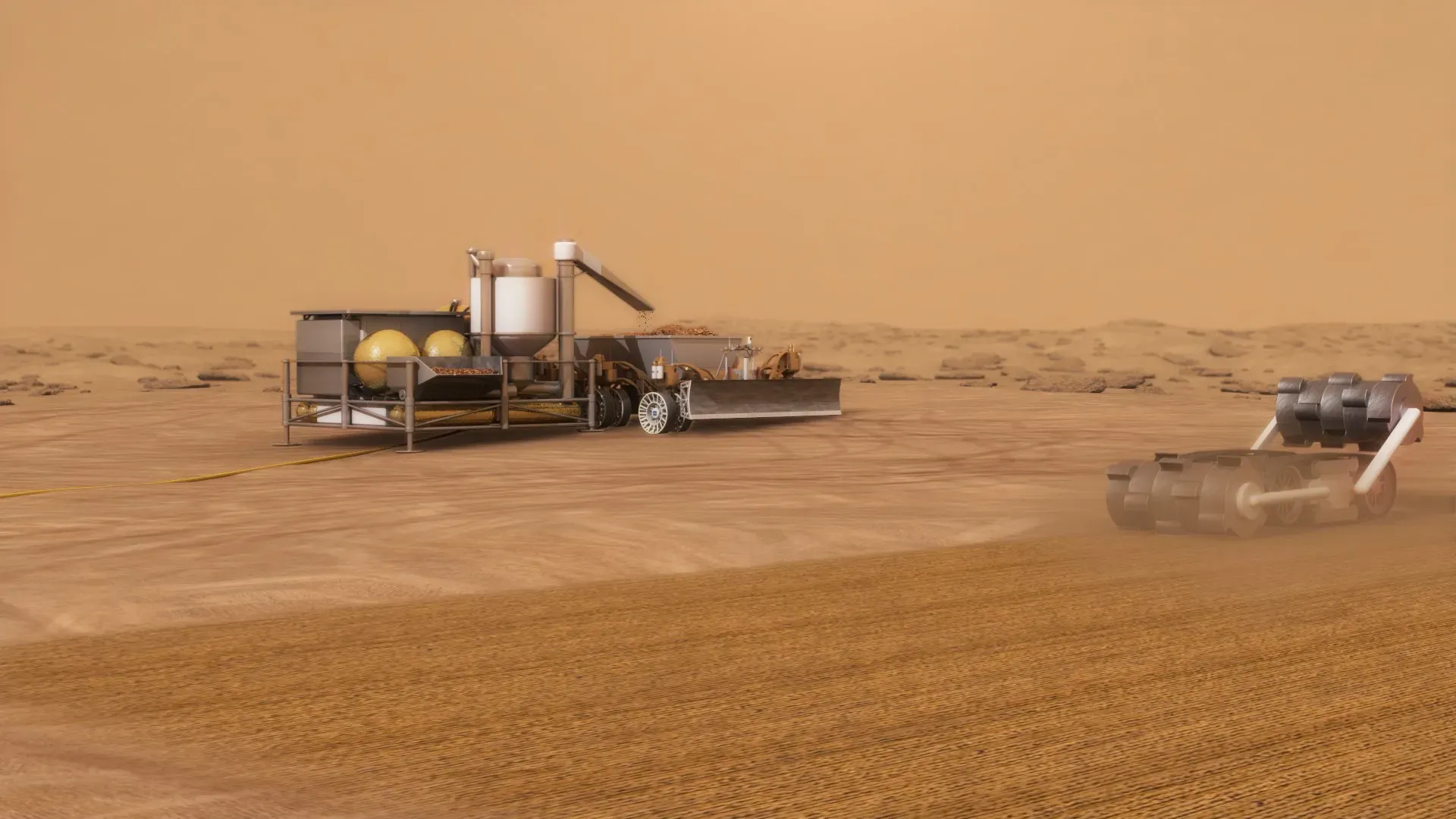
At some point in the future, we will walk on the Moon again, float in the clouds of Venus, touch the primordial crags of an asteroid, and ultimately step foot on Mars for the first time. Living and working in these environments will require us to exploit the raw materials there and turn them into usable resources, just like any living organism does.
Which brings up this question: When does it make sense to make more resources from local raw materials than we bring in from Earth? The answer to that question will depend on the mission, launch costs, the raw material being taken, the conditions at the destination, and the level of technology available.
The space industry loves acronyms. The one we're using for this is In-Situ Resource Utilization, or ISRU. In layman's terms, it's called "living off the land". It can be as simple as piling regolith on top of your lunar or Martian habitat. Or it can be as complicated as manufacturing rocket propellant from local CO2 and water. Further in the future, we would be able to build entire supply chains just from the raw materials of the solar system, lifting us to the status of an interplanetary civilization.
ISRU is "the collection, processing, storing and use of materials encountered in the course of human or robotic space exploration that replace materials that would otherwise be brought from Earth."
Sacksteder and Sanders, 2007
Most of the ISRU technologies we want to have aren't well-developed yet. When designing a mission, a competent systems engineer will need to make tradeoffs on when to include ISRU and in what capacity. For example, a human mission to Mars would be completely impossible without at least some ISRU - specifically propellant production (ISPP). If we assume SpaceX's Starship is used to ascend from Mars and return to Earth, fueling it on Mars would require about 1200 tonnes of propellant. This is well beyond anything we can realistically land on Mars in the near-term. So an ISRU/ISPP plant would definitely be required.
While ISRU can reduce launch mass for some missions, it usually comes with the following drawbacks:
- Increased power demand. Some ISRU processes, such as propellant production, are energy-intensive. Think large solar farms, or nuclear reactors that must be buried in the ground to avoid radioactivity. In very few locations would wind or geothermal power be an option. Also, vacuum makes it difficult to reject waste heat which limits the thermodynamic efficiency of these power systems.
- Increased complexity, difficulty, and risk. Extracting and refining resources from local raw material is inherently more complicated than just bringing them in from home. There are more steps, more moving parts, and more things that can go wrong. Would your mission be dependent on the ability of your excavators and ISRU plant to work when they need to, or do you have to bring in some water/oxygen/metal in case of failure?
- Cost to prospect for resources. At the beginning, orbiters can scan a planet/asteroid for telltale signs of a desired material at low resolution. The most promising areas would then be targeted for high-resolution, granular imaging with sensors mounted on vehicles mobile enough to cover a wide area. Ultimately, direct contact would be needed to quantify samples. All of that costs time and money to develop and operate.
- Cost of developing and validating the process. This is a given for all engineering projects, but the space environment drives up the difficulty. Validating the process in the space environment will require the use of specialized vacuum chambers to simulate lunar or Martian conditions. Only a few places have vacuum chambers in the large sizes needed to do a good simulation.
- Difficulty of implementation in extreme environments. For example, the lunar surface has 14 days of sunlight followed by 14 days of night. This causes extreme temperature swings between +200 and -200 degrees Celsius. The machinery being developed for use on the lunar surface will have to withstand the resulting thermal stress for years on end. Less so for Mars, but they will have dust storms as well.
- Waste management. Does the process result in outputs that can't be immediately used? Could this output be used as input for another process? If not, it's a waste product and must be removed from the loop and disposed of elsewhere.
- Ease of automation. That part determines how large a human crew is needed, and the attendant life-support costs. Can your ISRU process run on software alone or does it need humans to fix things in case they go wrong? The more complicated the ISRU process, the longer and more intensive the software development and testing process is. In the space environment, millions of kilometers from Earth, a software bug can have dire consequences.
These drawbacks imply that for a short-term mission, ISRU hardware probably wouldn't be worth bringing except as a demonstration. The very first ISRU prototype tested in real conditions - the MOXIE unit on the Perseverance rover that split Martian atmospheric CO2 into CO and O2 - used 300 W of power to generate 10 grams of O2 per hour.
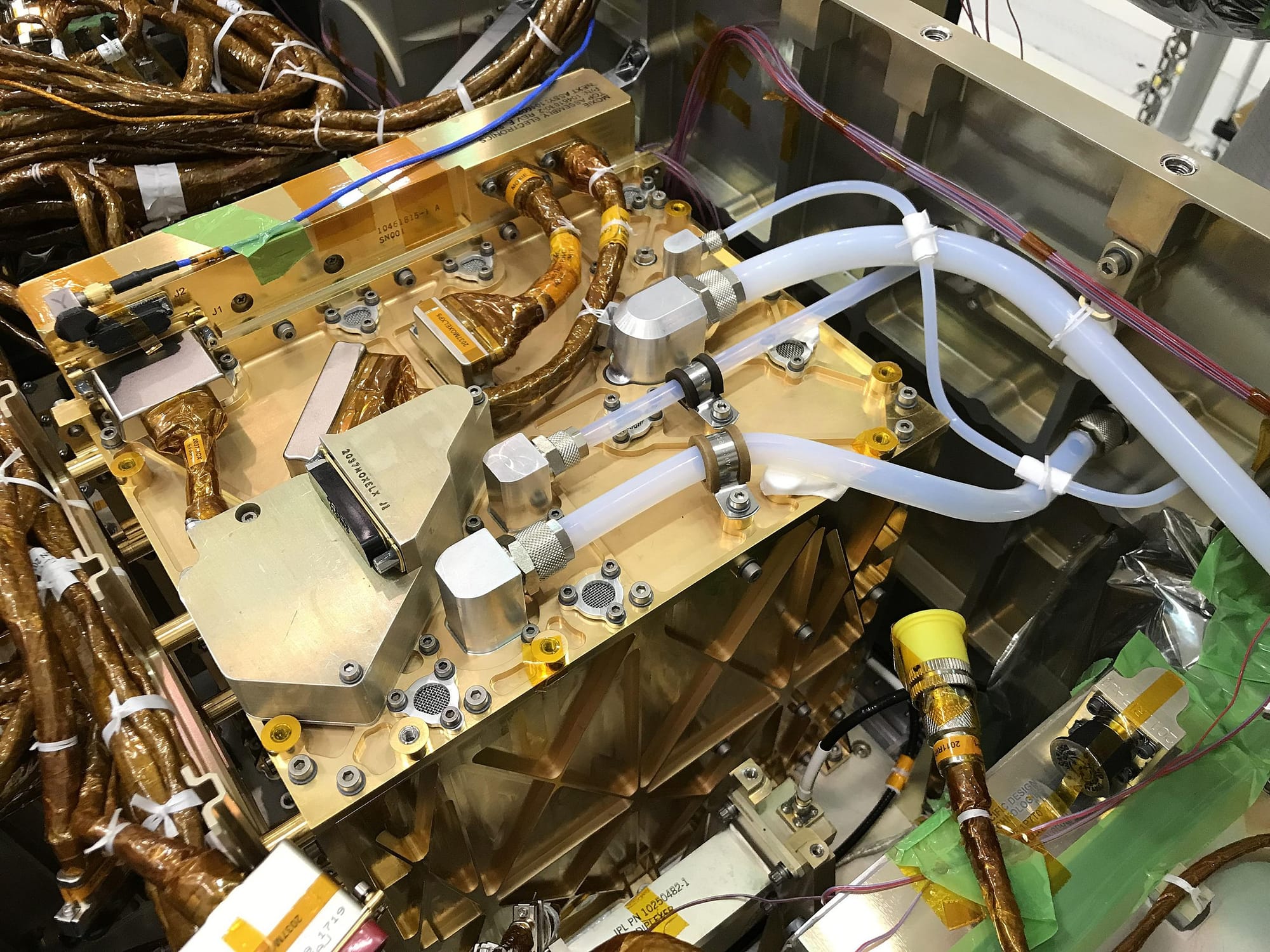
As MOXIE showed, collecting, separating, and splitting atmospheric gas is relatively straightforward. These systems could be used on Mars, Venus, and Titan. These are the walkable worlds in our solar system other than Earth that have significant atmospheres.
What about ISRU on airless bodies, such as the Moon and asteroids? Then we'd have to get our oxygen from the local regolith, which is ~40% oxygen by weight. We don't do this on Earth, because the atmosphere is already 21% oxygen and getting more oxygen from rocks is too energy-intensive to be practical. On airless bodies, there is no other option.
This distinguishes it from soil, which is biologically active.
Take the example of Blue Alchemist, the molten regolith electrolysis project recently developed at Blue Origin. The laboratory version takes lunar regolith simulant, melts it down, and runs an electric current through the magma to extract metals, glass, and oxygen at 99% purity. I could not find any hard numbers on how much energy/power Blue Alchemist uses. According to a paywalled paper that I was able to use my university credentials to obtain, the molten regolith electrolysis process generally uses 1.4 kW of continuous power to produce 500 kg of O2 a year. That's 57 grams per hour. Compared to MOXIE, the molten regolith electrolysis process generates 5.7 times the oxygen output for just 4.7 times the power input.
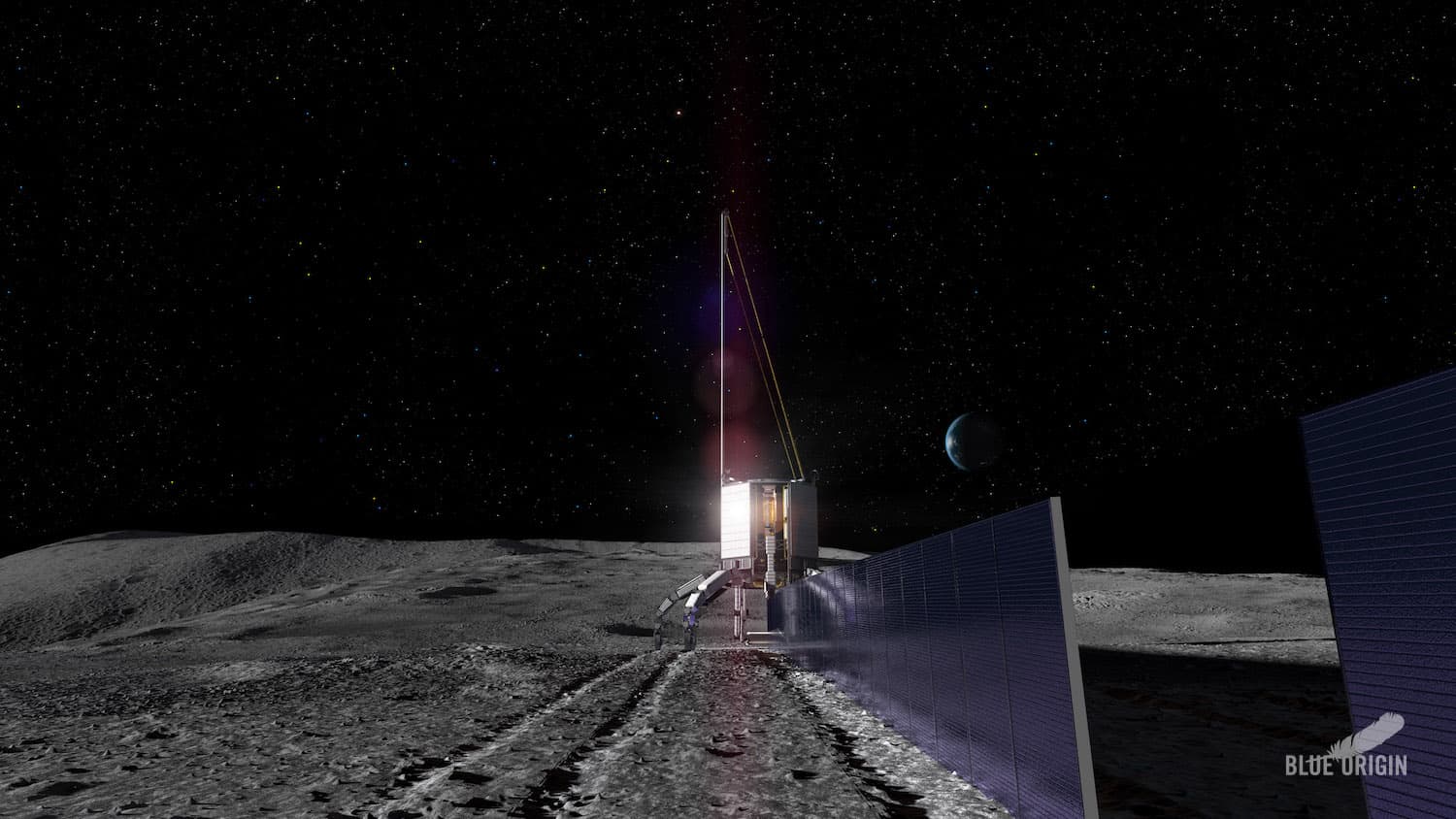
That sounds good on paper, but the main issue with molten regolith electrolysis right now is high electrical current (on the order of kiloamperes) and the waste heat it generates according to Joule's Law. In vacuum, the only way to reject heat is by radiation. Next up is the need to handle both the inputs (raw regolith) and the outputs (hot metals and gases). Handling both requirements in the same system, while maintaining reliability without human intervention, adds up to quite an engineering challenge.
Blue Origin's ultimate goal with their Blue Alchemist system is to print solar panels on demand from lunar resources. On Earth, making a solar panel depends on a long supply chain for raw materials, parts, transportation, and labor. This will probably not change for high-quality solar panels, but the ability to manufacture even crude solar panels on-location might make lunar permanence much easier.
Takeaways
- Atmospheric ISRU/ISPP will be easier than regolith-based methods.
- Waste heat rejection will be an issue with ISRU systems that require high electrical current in vacuum.
- High-temperature thermal control systems will need to be mastered before we can do ISRU on airless bodies.
- ISRU might be used for production of propellant and life support fluids before "finished" products.